The Amazon Bar Raiser Interview: What to Expect
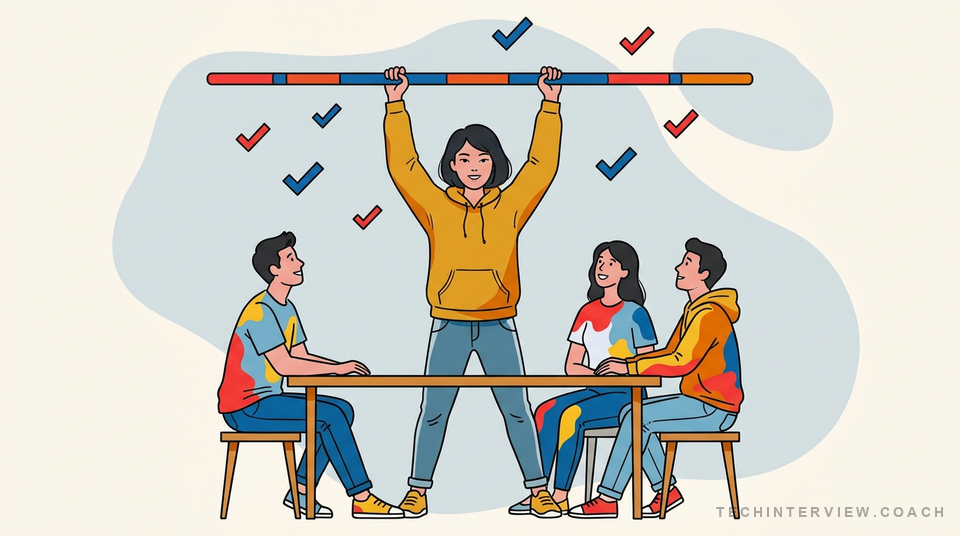
Somewhere in your Amazon loop there is an interviewer who does not work on the team you are applying to, has no stake in filling the role quickly, and can stop the hire on their own. That is the Bar Raiser. Candidates hear the name, read conflicting accounts online, and either over-prepare for a mystery round or ignore it. Neither helps.
This guide covers what a Bar Raiser is, what their round looks like in practice, what they are listening for, the questions they tend to ask, and how to prepare. Amazon does not publish the program's internals, so where details vary by team or year, this guide says so.
What a Bar Raiser is
A Bar Raiser is an experienced Amazon interviewer who has been trained and certified in the company's internal program and who joins loops outside their own organization. Their job is in the name: the hire has to raise the bar, meaning the candidate should be stronger than the current average at that level in that role, not merely good enough to fill the opening.
Three things make the role different from the others on the loop:
- Independence. The Bar Raiser does not report to the hiring manager and does not benefit from filling the role. Their incentive is the long-term quality of the company, not the team's roadmap.
- Veto. By most consistent accounts, a Bar Raiser can block a hire that the hiring manager wants to make. The reverse is not true: they cannot force a hire. In practice the decision is reached by consensus in the debrief, but the Bar Raiser's objection carries.
- Process ownership. The Bar Raiser usually runs the debrief, makes sure every interviewer's feedback is written before anyone speaks, and keeps the discussion on evidence rather than impressions.
Bar Raisers do this on top of their day job. Amazon selects them for interviewing quality and calibration, trains them through shadowing, and expects them to keep interviewing regularly.
What the Bar Raiser round looks like
Candidates often ask which interviewer was the Bar Raiser. Sometimes the recruiter tells you; often you only find out afterward, and sometimes never. Amazon does not always label the round, and the Bar Raiser is not required to announce themselves.
What the round usually looks like:
- The format is the same as the other behavioral rounds: 45 to 60 minutes, leadership-principle questions, STAR answers expected. For technical roles the Bar Raiser may also ask a technical question, but the behavioral part is their focus.
- The Bar Raiser is assigned leadership principles like everyone else, but they tend to range more widely, because part of their job is to cover gaps and to cross-check what other interviewers heard.
- Follow-ups go deeper. Where another interviewer might take your result at face value, a Bar Raiser asks how you measured it, what the baseline was, who else was involved, and what you would do differently.
- They test the hire against the level, not against the job description. A candidate interviewing for a senior role gets senior-level follow-ups: scope, influence without authority, decisions with incomplete data.
If you cannot tell which round it was, that is fine. Prepare as if every round is the Bar Raiser round, because the standard is the same.
What the Bar Raiser listens for
Interviewers across the loop are collecting evidence; the Bar Raiser is specifically listening for the things that are hard to fake.
- Consistency. Does the story hold up under four follow-ups? Do the details match what you told the previous interviewer?
- Specifics. Names of systems, numbers, dates, the exact decision point. Vague stories are a signal in themselves.
- Your role versus the team's. The Bar Raiser will separate what you did from what happened around you. "We shipped it" invites "what did you personally do?"
- Judgment. Not just what you did but why, what you considered and rejected, and how you knew when to stop analyzing.
- How you handle not knowing. A candidate who says "I don't know, here is how I would find out" scores better than one who improvises an answer.
- Self-awareness. Can you name a real failure and what it changed in you? Can you describe a time you were wrong without reframing it as a success?
- Trajectory. Is this someone who will be stronger in two years, or someone at the top of their range?
Bar Raiser interview questions
The questions themselves are usually ordinary leadership-principle questions. What makes them Bar Raiser questions is the follow-up chain. Below are fifteen openers with the kind of follow-up to expect.
- Tell me about the project you are proudest of. Follow-up: what did you personally own, and what would the result have been without you?
- Tell me about a time you failed. Follow-up: what did you change afterward, and when did it come up again?
- Describe a decision you made with incomplete information. Follow-up: what would have changed your mind?
- Tell me about a time you disagreed with your manager. Follow-up: how did you disagree, and what happened after the decision went against you?
- Tell me about a time you had to deliver something you did not believe in.
- Give me an example of a time you raised the bar for your team. Follow-up: who pushed back, and what did it cost?
- Tell me about a time a metric and the story on the ground disagreed. Follow-up: how did you find out which was right?
- Tell me about a time you had to say no to a customer or a stakeholder.
- Describe something you simplified. Follow-up: what did you remove, and what broke?
- Tell me about the hardest feedback you have given. Follow-up: how did the person react, and did it work?
- Tell me about a time you took a risk that did not pay off.
- What is something you believed strongly two years ago that you no longer believe?
- Tell me about a time you had to influence a decision without authority over the people involved.
- Describe a time you noticed a problem nobody owned. Follow-up: why was it unowned, and what did you do about the cause?
- If we hired you and it did not work out, what would most likely be the reason?
The last one is a Bar Raiser favorite because an honest answer requires self-knowledge and a dishonest one is easy to spot.
How the Bar Raiser shapes the debrief
After the loop, every interviewer submits written feedback with a hire or no-hire vote and the evidence behind it, before seeing anyone else's. The Bar Raiser typically runs the meeting that follows.
What that looks like, by consistent accounts:
- Feedback is read first, discussion second. The Bar Raiser is there to stop the loudest or most senior voice from setting the tone.
- Each principle is discussed against evidence. "I liked them" does not count; "they described the baseline and the measurement" does.
- The Bar Raiser asks the question the hiring manager might skip: is this candidate stronger than the current average at this level, or just good enough to fill the role?
- If the loop is split, the Bar Raiser pushes the group to a decision and documents the reasoning. A no-hire with clear reasoning is considered a good outcome for the process, even if it is a bad day for the candidate.
For you, this means the written record matters more than the room's mood. Specifics you give to one interviewer become evidence for all of them.
How to prepare
Preparing for the Bar Raiser is the same as preparing well for the whole loop, with the depth turned up.
- Build eight to ten stories with the story bank method, each mapped to two or three principles. The Amazon behavioral interview questions list shows what each principle is testing.
- For every story, write the follow-up chain yourself. What was the baseline? Who else was involved? What did you reject? What would you do differently? If a story cannot survive four follow-ups, it is not ready.
- Prepare two failure stories in full, with the real cause and the real change. Not "I learned to communicate more."
- Practice out loud with someone who interrupts. Solo practice rarely produces follow-up pressure; a mock interview with an interviewer who pushes back does.
- Know your level's bar. A senior candidate should be ready to talk about scope, trade-offs across teams, and decisions made with incomplete data; a junior candidate should be ready with concrete, personal, well-measured work.
- Keep opening answers short. Ninety seconds, then let the follow-ups come. A Bar Raiser with no time left for follow-ups cannot write strong evidence for you.
Common mistakes
- Trying to identify the Bar Raiser and relaxing in the other rounds. Every round feeds the same debrief.
- Treating the deeper follow-ups as hostility. They are the interviewer trying to find evidence in your favor; help them.
- Answering "what would you do differently" with "nothing".
- Using "we" through the action part of the story.
- Giving a rehearsed failure that is secretly a strength.
- Bluffing on a detail. A Bar Raiser will ask one more question, and the bluff will show.
Related guides
- Amazon interview process: the full loop from assessment to offer.
- Amazon leadership principles: what each principle means and the questions it produces.
- The STAR method: the answer shape every interviewer on the loop expects.
Want follow-up pressure before the real loop? Get matched with a coach who has interviewed at Amazon, or start with the behavioral questions by principle and the interview process guide.